2026-09-20 · Robert Ellis
Why Palm Coast Attics Grow Mold After Summer Humidity Spikes
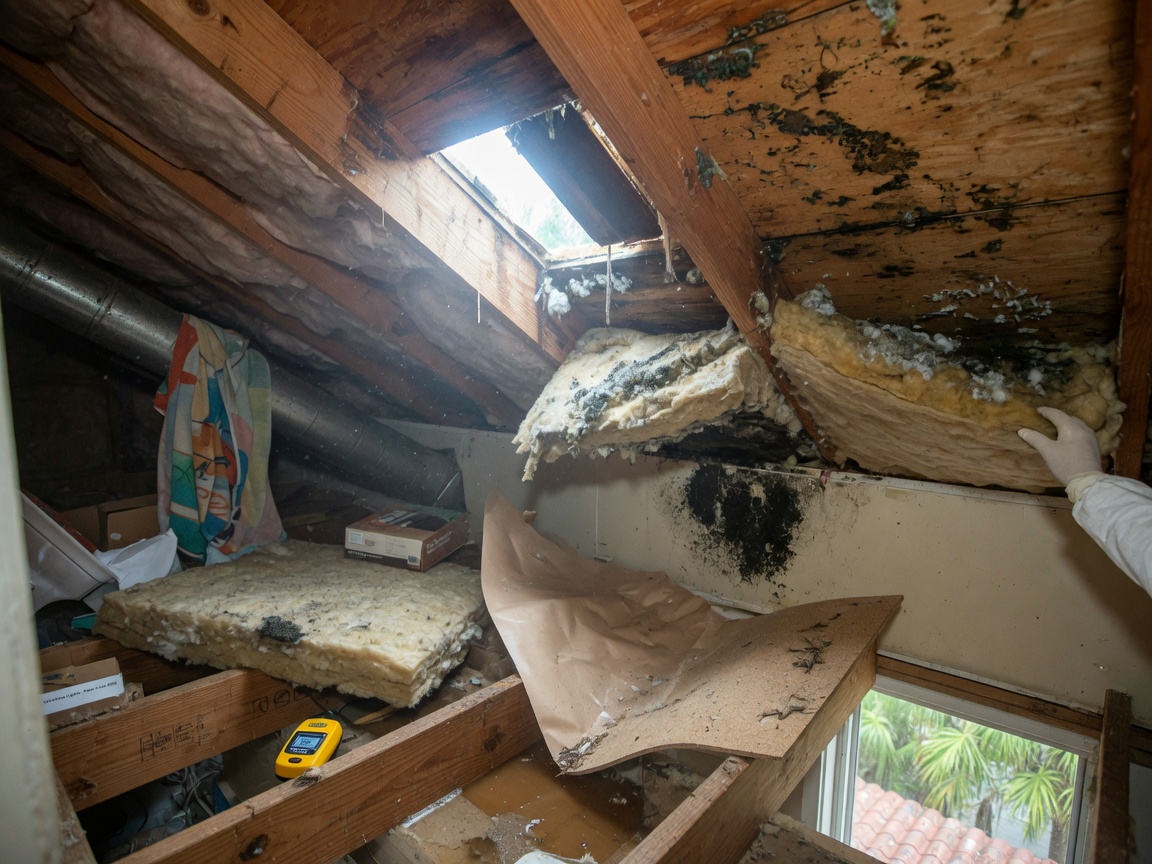
Palm Coast attics grow mold after summer humidity spikes because the humid subtropical climate keeps outdoor relative humidity above 80 percent for extended stretches, and attics lack enough airflow to exhaust the moisture that enters through roof penetrations and ceiling leaks. Once indoor attic temperatures drop below the dew point at night, condensation forms on wood framing and insulation, creating conditions for mold colonies to establish within days. Homes in Palm Harbor, Indian Trails, and Matanzas Woods often show this pattern because many were built with standard soffit and ridge vents that become blocked by insulation or debris over time.
Flagler County Summer Humidity Patterns
Flagler County's location between Daytona Beach and St. Augustine produces consistent summer humidity that lingers even after afternoon storms pass. Daily highs in the upper 80s combine with overnight lows in the mid-70s, so attic air rarely cools enough to release trapped moisture before the next day begins. This cycle repeats for weeks, pushing moisture levels high enough that even small ventilation shortfalls allow condensation on roof sheathing. Homes near Washington Oaks Gardens State Park and Flagler Beach face added salt air that accelerates wood moisture retention once humidity enters the attic. Residents notice the difference most in August when dew points stay elevated and mild winter patterns have not yet arrived to dry the space.
How Local Housing Stock Traps Moisture
Many Palm Coast homes built before 2005 have attic insulation that sits directly against roof decking, blocking soffit vents and reducing natural airflow. In neighborhoods like Indian Trails and Matanzas Woods, cathedral ceilings and complex rooflines create dead air pockets where humidity from bathroom exhaust fans or HVAC ducts collects without escaping. When summer spikes push outdoor humidity higher, these pockets reach saturation faster than in newer, better-vented homes. The result is visible mold on rafters within two to three weeks of sustained high humidity. Checking for blocked vents during these periods prevents the moisture from migrating downward into living spaces.
Ventilation Failures Common After Humidity Spikes
Standard ridge vents in Palm Coast attics often clog with pine needles and oak pollen that accumulate during the wet season, cutting effective airflow by half or more. Bathroom fans venting into attics instead of outside add several gallons of moisture daily during peak summer use. In Palm Harbor and Matanzas Woods, tree cover shades roofs and keeps attic temperatures closer to outdoor dew points, increasing condensation risk on cooler nights. Attic Mold From High Humidity and Trapped Moisture explains how these conditions combine. Simple steps like clearing soffits and ensuring ridge vents remain open reduce the chance of mold starting after each humidity event.
Practical Steps for Palm Coast Homeowners
Inspect attics in early fall after the worst humidity months to spot early discoloration on rafters or insulation before it spreads. Clearing debris from vents and confirming bathroom exhaust routes to the exterior stops the main moisture sources. How To Spot Early Attic Mold Before It Spreads Into Living Spaces outlines visual checks that work in Flagler County homes. When mold appears on wood framing, targeted removal keeps the issue from affecting nearby areas like Lehigh Woods or Cypress Knoll. What Affects Attic Mold Remediation Costs Along The Flagler Coast details the variables that influence project scope in these neighborhoods.